Blog Post: When students do the talking
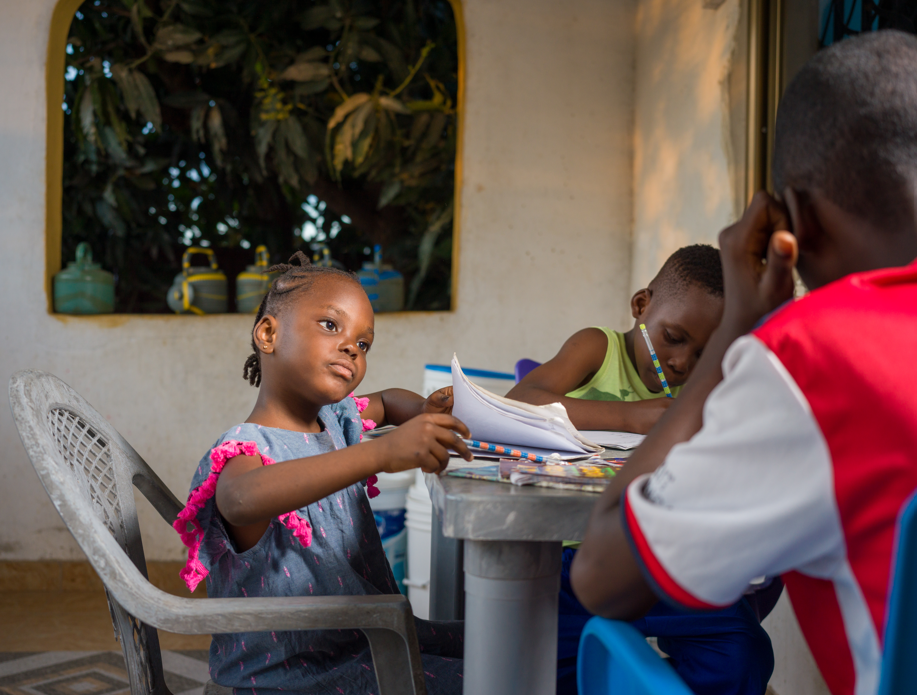
In a new blog post (shared below) from the Numeracy Research and Development (NRD) Fund, written by Natalie Lamprell, Obed Tetteh Nyakotey (Rising’s Math Curriculum Lead) and Rose Goodhart (Rising’s Director of Academics) share what they learnt from a pilot with sixteen teachers across eight schools in northern Ghana, where they redesigned the "We Do" section of early grade maths lessons to put student talk at the centre. By restructuring questions around "Turn and Talk" prompts that asked students to reason, justify, and spot mistakes, they found that students were more engaged, more confident, and more able to complete independent work.
—
What happens when students do the talking?
by Obed Tetteh Nyakotey and Rose Goodhart
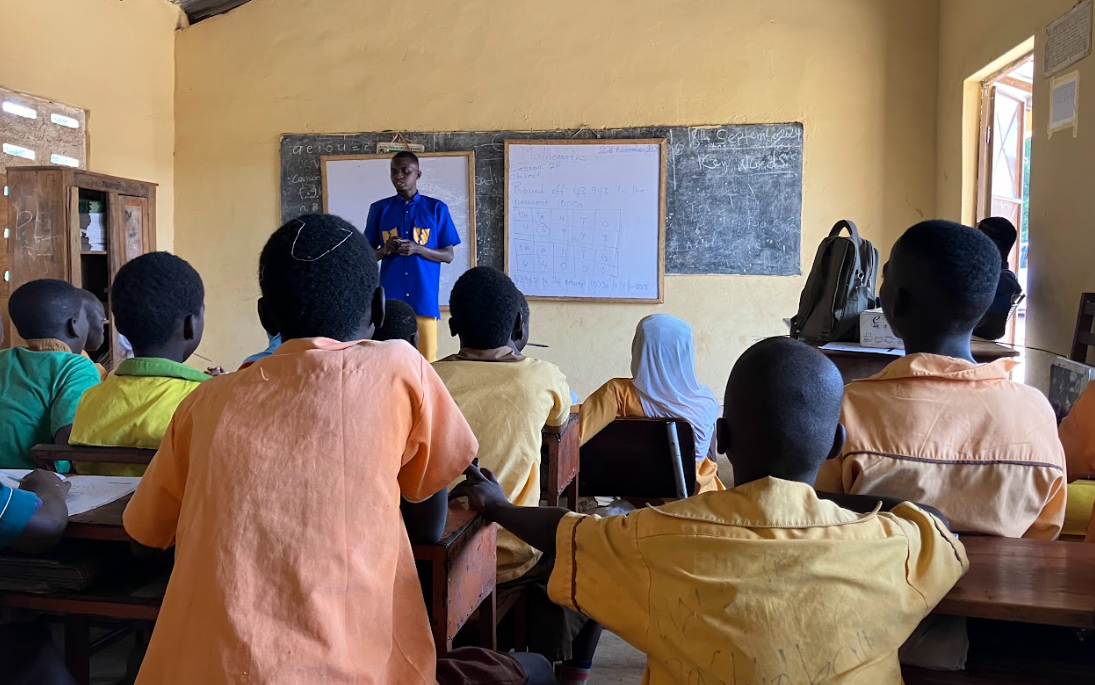
What do you expect to hear stepping into an early grade math classroom?
The teacher talking? Individual students responding to questions? Students talking with each other? Students working silently? Students laughing? All of the above?
What do you often hear? The sound of the teacher talking. Despite all the research indicating the importance of student talk, it is something that is so often overlooked.
Over the past few months, we have been working with teachers and students in northern Ghana. We will share how we redesigned the We Do section to get students to do more of the talking and what we learnt from the process.
The problem with the ‘We Do’
The ‘I Do, We Do, You Do’ is a simple and familiar model for teachers. At its best, it gradually shifts the thinking from the teacher to the student. The teacher models first, then the class practises together and finally students work independently. The ‘We Do’ is where students try out new thinking with support, and where misconceptions can surface while the teacher is still there to guide them.
A risk is that the ‘We Do’ just becomes an extension of the ‘I Do’ with more time for teachers to talk. The teacher keeps explaining. The class watches. The lesson slows down. Students wait for the teacher to do the maths for them.
So we asked: what would happen if we designed the ‘We Do’ so that students always had to be involved?
Designing for talk, not hoping for it
Talk is not an ‘extra’, it is the very process of learning.
At first, we tried adding one ‘Turn and Talk’ question to the ‘We Do’, followed by four whole class questions. When we tested this, we noticed something familiar. Whole class questions often meant the teacher asked, and one confident student answered.
We then redesigned the ‘We Do’ around two main questions. The first prepares students for independent work. The second stretches their thinking, asking them to reason, spot mistakes, justify answers or think beyond the exact objective of the lesson.
For each question, students would ‘Turn and Talk’ to their partner first, before the teacher brought the class back together to discuss both the answer and the thinking behind it.
This gave every student in the class a chance to do the maths. It also gave the teacher a stronger understanding of where the class were and what support was needed.
What worked?
We iterated a Grade 3 place value lesson over 12 times – testing out different question types, instructions, designs – all with the purpose of ensuring students were really thinking and teachers felt confident facilitating. We made sure every question had the answer next to it to guide teacher feedback.
Students were first asked a question directly linked to what they would later practice in the You Do:
a. Turn and Talk: What is the value of 9 in the number 394?
This got students talking and helped prepare them for independent work.
The second question stretched their thinking further:
b. Turn and Talk: In the numbers 394 and 349, does the 9 have the same value? Why or why not?
This was where the class came alive. Students were really thinking about the answer and explaining their thinking to one another. When the teacher brought the class back together, they were so ready to share what they discussed.
We found that the strongest questions did not need to be complicated. They just needed to make students think:
How many ones are there in 7 hundreds? How do you know?
In the number 999, if we change the 9 in the ones place to 0, is the number bigger or smaller?
Is counting by 10s faster than counting by 1s? Why?
Does the ones digit change when we count by 10s? Why?
Kofi says there are 3 counters because he counted them as 1, 1, 2, 3. What did he do wrong
So what did we learn?
We tested this ‘We Do’ across eight schools and sixteen teachers, here are some of our key findings:
Students surprised us with what they could do
Before the pilot, some teachers were unsure whether students would be able to answer these kinds of questions. But as teachers started to teach in this way, something shifted. They began to notice, and get excited by, what their students could do when they were given the chance to do the talking themselves. When we only ask simple recall questions, students give simple answers but when we ask better questions, we get better thinking.
The ‘You do’ became what it should be
Because students had talked through their thinking during the ‘We Do’, they were often able to complete the ‘You Do’ questions faster and with more confidence.
Students were more engaged
Students were eager to share what they had discussed with their partner and we could really hear that engagement in the lesson.
In one school, the change was so noticeable that when a School Leader heard unfamiliar sounds coming from a Basic 3 maths classroom, he came to the window, curious about what was happening. He saw students talking in pairs, reasoning through problems together and fully engaged in the task. He stayed for the entire lesson.
“This wasn’t chaos” he stated after the lesson, “this is how we must teach mathematics now.”
The teachers helped make the talk work
One of the best parts of the pilot for us was seeing how the teachers brought it to life. They helped shape the process, giving feedback during and after lessons on what would help make them, and other teachers, use the routine consistently.
Having the words ‘Turn and Talk’ next to each question was their suggestion and something we would have easily overlooked. It acted as a useful reminder to pause and build a new habit before falling back into the natural rhythm of teacher talk.
As the pilot went on, teachers became more confident setting up the ‘Turn and Talk’ and bringing the class back together to really discuss the maths.
That is what makes us excited about what comes next. The work was not only about improving a lesson plan. It was about learning with teachers.
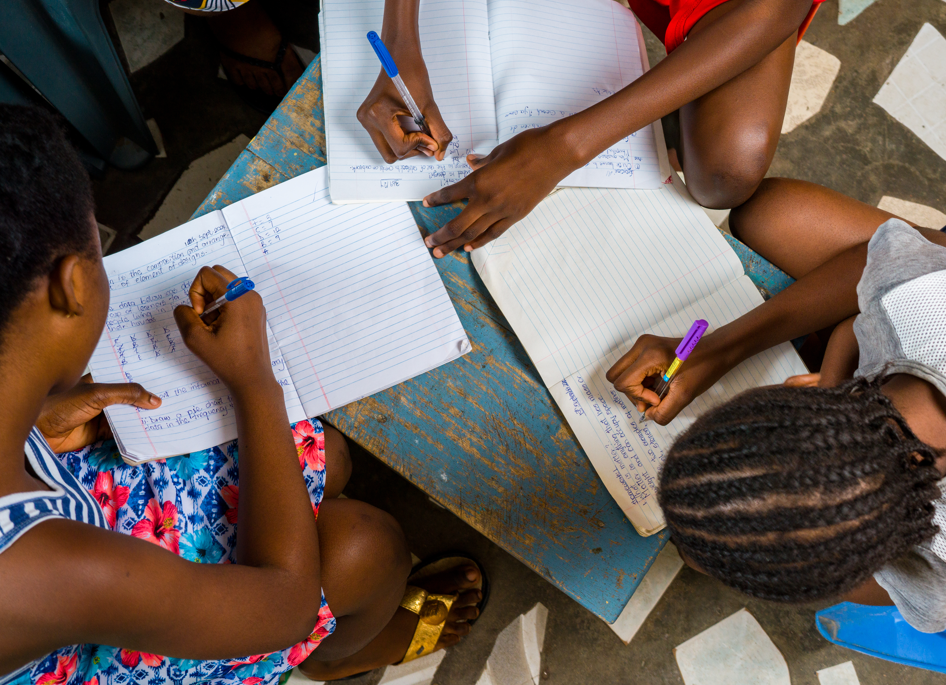
What comes next?
The next step is to take what we learnt with the pilot teachers and design the rest of our lessons. There is also a real opportunity for the teachers to become champions of this approach by sharing what worked across their schools and helping other teachers see that student talk is not a distraction from learning, it is how learning happens.
Have you tried building more student talk into foundational maths lessons? What changed in your classroom? The answers might surprise you and your students probably will too!
Read the original article here: https://nrdfund.org/what-happens-when-students-do-the-talking/