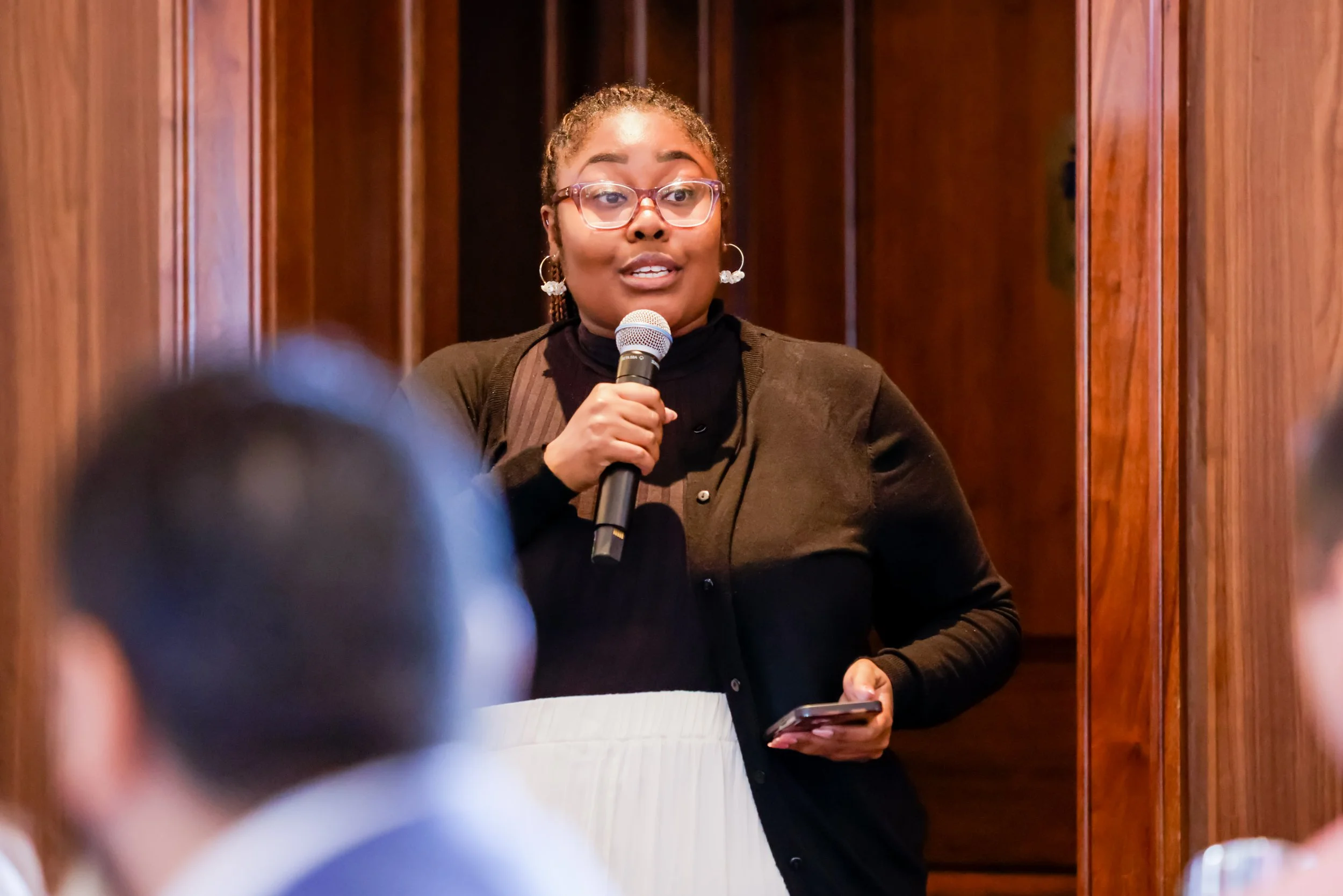
Iman Beoku-Betts, our Head of Digital Learning and Partnerships - Sierra Leone, at UNGA 2026
During this year’s United Nations General Assembly week in New York, one question kept coming up in conversations about AI and education: how do we move from a promising technology to something that actually works, week after week, inside a public school system?
For Rising, that question is becoming increasingly important.
Rapid advances in AI are expanding what education tools can do. Open-source technology can widen access further, allowing more organisations to experiment, adapt and build for their own contexts. But neither of those things guarantees that a tool will improve learning, be useful to teachers or become something a government can realistically sustain.
That gap between what gets built and what public education systems can actually adopt, integrate and sustain is what our Head of Digital Learning and Partnerships, Iman Beoku-Betts, described during UNGA as the “missing middle.”
At Education House, Iman helped lead the Open Sourcing AI for Education session alongside Global Schools Forum, Taleemabad and Jackfruit Finance. Her argument was deliberately practical: opening up the technology can solve part of the access problem, but it does not solve adoption. A tool still needs to fit within the school day, work for teachers and school leaders, demonstrate that it improves learning, protect children’s data and remain affordable and reliable over time.
The sophistication and capability of the underlying model matter enormously. But they are only one part of what determines whether an AI tool succeeds in a public education system.
It also requires relationships with ministries, districts and schools. It requires understanding curriculum and pedagogy. It requires training, devices, connectivity and technical support. It requires evidence on learning, implementation and cost. And, critically, it requires listening to teachers and students and adapting when something does not work as expected.
These are lessons we are learning through our own AI work, including Rori, our AI-enabled maths tutor, as well as through our work helping governments test and adapt technologies developed by other organisations. Our experience has increasingly convinced us that the important question is not simply whether a technology is impressive. It is whether it is genuinely fit for the context in which teachers and students are expected to use it.
That theme continued in Teachers Shaping the Future of EdTech, another Education House session in which Rising’s Luke Heinkel, Director of Insights and Impact shared our experience of co-designing technology with teachers in Rwanda. The discussion focused on a principle that should be simple but is still too often missed: education technology should be developed with teachers, not simply for them. Teachers understand the practical constraints of the classroom, where a tool adds value and where an apparently good idea creates additional burden. Their participation is fundamental to designing technology that has a realistic chance of working at scale.
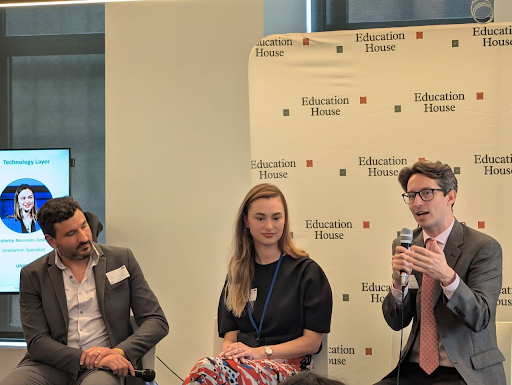
Luke Heinkel (right) at the Teachers Shaping the Future of EdTech Session. Education House.
Starting with government priorities
UNGA was also an opportunity to connect these technology conversations with Rising’s wider government partnership work.
At Global Schools Forum’s ministerial convening, Rising was joined by two of our closest government partners: Hon. Conrad Sackey, Minister of Basic and Senior Secondary Education in Sierra Leone, and Hon. Joseph Nsengimana, Minister of Education in Rwanda. Rising had invited both Ministers to participate in the convening, where the discussion centred on foundational learning reform, government ownership and what it takes to move from promising programmes towards sustainable national scale.
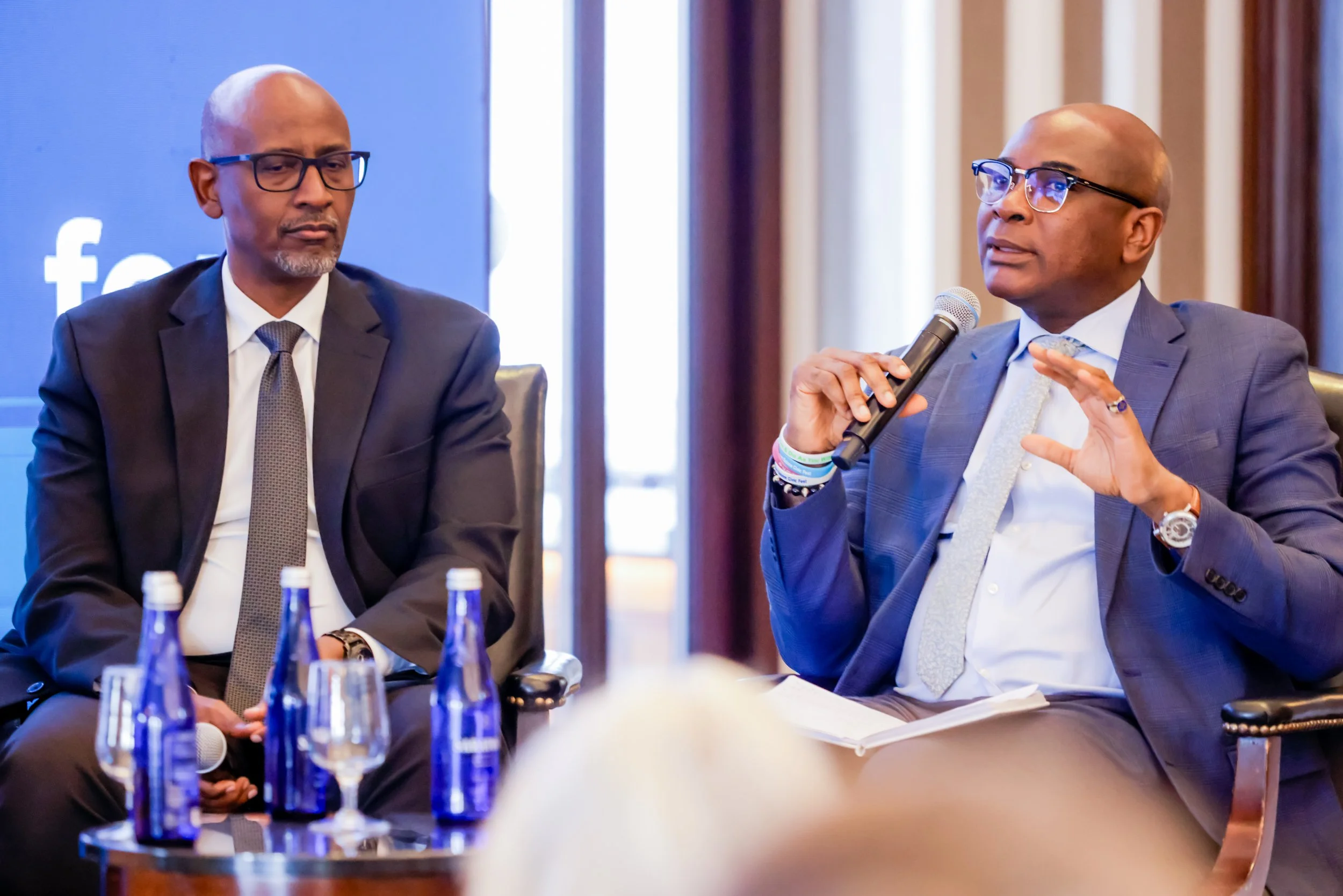
Hon. Joseph Nsengimana, Minister of Education in Rwanda (left) and Hon. Conrad Sackey, Minister of Basic and Senior Secondary Education in Sierra Leone (Right)
That connection matters for how we think about AI.
The starting point should not be: What can this technology do?
It should be: What problem is the education system trying to solve?
In some cases, AI may enable better personalised learning. In others, it may help teachers plan lessons, strengthen coaching or make assessment more useful. In still others, the right answer may not involve AI at all.
Governments ultimately need to understand not only whether a tool works, but what it costs, what infrastructure it requires, how it fits alongside teachers, who owns and protects the data, and whether it can integrate into the systems they already operate.
From promising tools to public-system impact
This is where we see an increasingly important role for Rising.
We are developing, testing and scaling our own tools, but we are also increasingly working with governments, funders and technology partners to co-design, localise, test and improve solutions developed by others as well.
Our value is not simply access to schools. It is the combination of government partnership, pedagogy, implementation, evidence and the ability to learn quickly from what happens in real classrooms.
For AI builders, that can mean answering some of the questions that are hardest to answer from the technology side alone: Does the product work with the curriculum? Can teachers use it effectively? Do students understand the language? What level of device access is actually required? What does implementation really cost? Does it improve learning? And what would have to change before a Ministry could consider taking it to meaningful scale?
UNGA reinforced our conviction that there is enormous potential for AI in education. But converting that potential into better learning will require combining increasingly capable technology with the implementation, evidence and government partnership needed to make it work in real education systems.
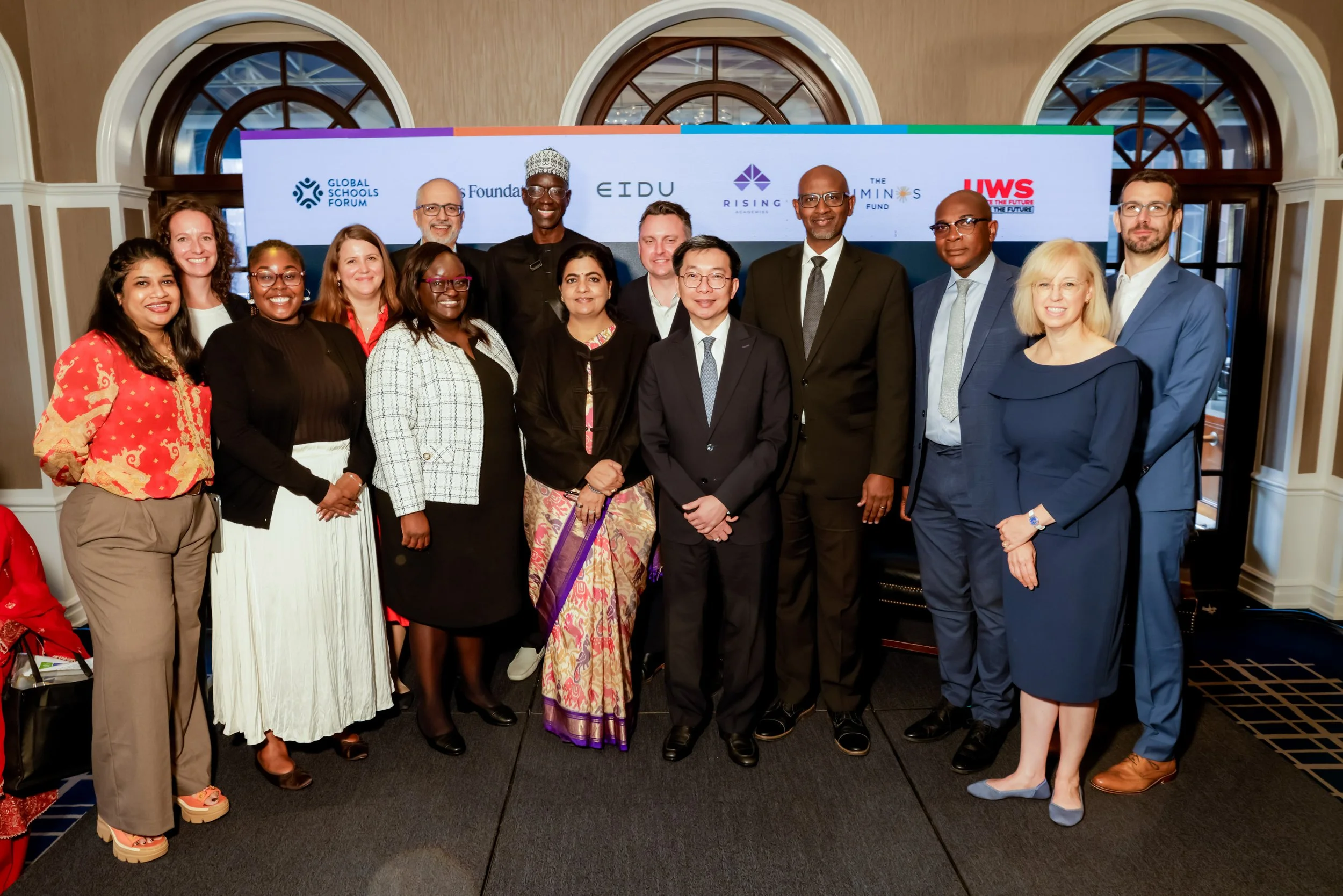
Open Sourcing AI for Education Session at Education House, hosted by the Global Schools Forum